Best Ways to Increase eCommerce Conversion Rates: Proven Tips in 2025

Introduction
Online shopping is booming. In 2025, global online sales figures are expected to hit $4.3 trillion, but eCommerce is not an easy way to make money. Competition is tough. Running costs are rising. Consumers have sky-high expectations. Bad reviews can ruin you in an instant. The list goes on.
Conversion rates are one of the top markers of eCommerce success. If you run an online business, tracking conversion rates will tell you how your store is performing. There are golden opportunities to create and develop incredible eCommerce businesses, but how do you achieve the holy grail and turn browsers into buyers? This is the burning question all retailers have. The good news is we have the answers.
In this comprehensive guide, we’ll outline the best ways to increase eCommerce conversion rates, sharing pearls of wisdom and ingenious ideas to supercharge sales and maximise ROI. If your mission is to send your conversion rates soaring in 2025, read on.
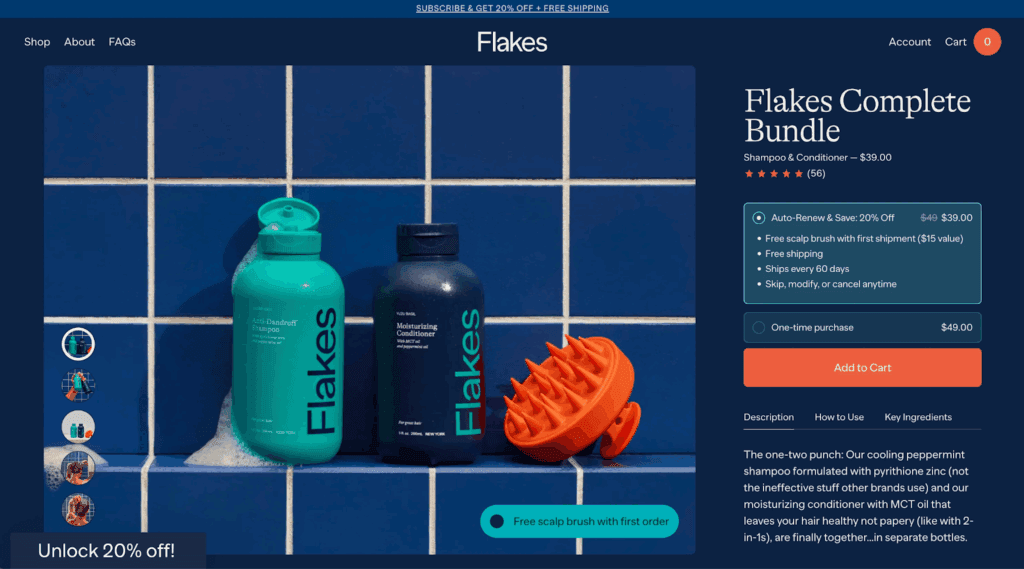
Image via https://www.shopify.com/uk/blog/expert-advice-improve-product-pages
Optimising Product Pages for Higher Conversions
If you’re anything like me, nothing is more enticing than spectacular-looking product pages bursting with high-quality photos and captivating copy.
When you sell products online, it’s crucial to hook buyers in and encourage them to spend time browsing products, find out more, look at images, and finally, click on ‘add to cart,’ ‘buy now’ or ‘save to wishlist.’
The truth of the matter is that most people browse rather than buy. It makes for unpleasant reading for store owners, but the average eCommerce conversion rate floats at around 2.5% – 3%, according to Shopify. This is frustrating for vendors, but it’s a reality we have to face.
The challenge is to buck that trend and make your products so appealing and alluring that buyers can’t possibly save items for later or, god forbid, abandon their cart.
So, how do we solve a problem like low or stalling eCommerce conversion rates? The first step is to optimize product pages. Here are some key factors to consider:
- High-quality, impactful, useful images
Visual media is incredibly powerful. In the world of marketing and advertising, many of us are suckers for glossy photographs, slick videos, and perfectly-lit shots that take full advantage of flattering angles. You can use images and clips to showcase your products in all their glory, but critically, using visual media can also enhance conversion rates by showing how products work. Research shows that a staggering 91% of consumers have watched an explainer video before purchasing a product (source).
The most important points to cover when adding images and videos to your store or site are quality, clarity, brand relevance and consistency, and creating media that will connect and resonate with your target customer.
- Create engaging, persuasive copy
The copy you create for your product pages should be compelling, convincing and persuasive. The goal is to encourage every user to buy or respond positively to tailored content and an ingenious CTA.
Avoid repetitive sentences, complex language and jargon and long chunks of text. Be punchy. Be succinct. Put yourself in the buyer’s shoes. Prioritise quality over quantity and optimise image descriptions, video tags, headlines and titles. Use copy to highlight the benefits and features of your products and explain why they’re life-changing for the shopper. Make them feel like they can’t possibly live a moment longer without that product in their life.
- Make buying products as easy as possible
Time is money in eCommerce. One of the main reasons we gravitate towards online shopping is speed.
Gone are the days when you had to trot down to a local shop to buy something. Now, you can order at the touch of a button. Your role as a store or business owner is to make it as easy as possible to buy. Add CTAs, use features such as 1-click ordering, allow users to checkout without registering and link cards, and streamline the process. If it takes too long to find or buy products, you’ll lose customers.
- Cater to mobile users
Studies show that over a third of web users will shop online using mobile devices by the end of 2025 (source). If you’re creating or updating product pages, always ensure your content is mobile-friendly.
Enhancing User Experience on Your Ecommerce Site
User experience is one of those buzzwords that appears to be everywhere. The reason for this is that times have changed. In 2025, shoppers want more.
Of course, we want great products and tantalising offers, but we also want to enjoy the experience of shopping. Enhancing user experience on your site is a proven way to increase eCommerce conversion rates.
It’s all very well knowing this, but how do you make your customers’ experience better?
Simple steps include:
- Make sure your site or store is easy to navigate
- Prioritise site speed and content and image quality
- Make it easy to leap from one page to another
- Use categories and filters effectively
- Review pages regularly
- Provide a search function
- Add customer-focused features
- Give customers helpful, relevant information about your products, payment and delivery options and returns
- Add an FAQ section
- Provide easy access to customer support
- Optimise every page for mobile devices
- Keep the checkout process as simple and quick as possible
- Ask for customer feedback and use reviews to improve your site
Using High-Quality Images and Videos
A recent study conducted by Etsy revealed that 90% of shoppers value high-quality, attractive images as the most important factor when buying goods. The quality of images can make the difference between orders flying in and high bounce rates.
If possible, enlist the services of a professional photographer or agency to capture images that make your products look fantastic. High-quality images don’t just make your products stand out and steal the limelight, but they also create positive brand impressions. If you use great photos and videos, your brand automatically looks more trustworthy, reputable and professional.
Using images and videos on your website is an excellent way to enhance visual appeal and create stunning aesthetics. It also plays a pivotal role in generating interest and pushing shoppers through the sales funnel.
Video content is particularly compelling. Did you know that social media posts that contain video clips are shared more than 1,200 times more than text ad images combined? Want an easy way to get people talking and make your pages and products pop? It’s simple. Add a snappy, slick video.
The lure of video lies not just in its ability to make products look sensational, but also in its function as a demonstrator. Video helps viewers retain an impressive 95% of information compared to just 10% when reading a text description (source).

Image from https://blog.hubspot.com/marketing/call-to-action-examples#
Implementing Effective Call-to-Actions
We’ve all been there. We’re scrolling through products, about to shut a page down when, bang, out of nowhere, comes a banner, heading or button that sucks us in and makes us part with our hard-earned cash. A call-to-action, or CTA, is designed to influence user actions. From buying a product in an instant to signing up to a newsletter, securing a discount or subscribing, CTAs can be a potent weapon for business owners.
What makes an effective CTA, you ask? It’s important to tailor your CTAs to suit your objectives and the target customer, but some golden rules to follow include:
- Keep the CTA short, simple and snappy
- Add action verbs
- Encourage people to act fast and avoid missing out
- Be original and inventive: Make your CTAs stand out
Proven CTA strategies include (source):
- Using power verbs: This can increase lead conversion rates by almost 13%
- Adding a button: This can boost the CTR (click-through rate) by over 30%
- Using a welcome gate: These boast CTRs of between 10% and 25%
- Using A/B testing: Using A/B testing is a brilliant way to see how different CTAs fare and what kinds of CTAs trigger positive actions in buyers
Mistakes to avoid when adding CTAs to your site include:
- Long CTAs
- Complex language
- CTAs that blend in rather than stand out
- Providing too many options or too much information
- Putting CTAs in the wrong place on the page
- Creating confusion or ambiguity
- Being too aggressive or pushy
Simplifying the Checkout Process
Is there anything more annoying in 2025 than online checkouts that take ages or require you to fill in a million boxes? We don’t have the time, the patience, the energy or the inclination to waste time on complex, inefficient checkout processes. We’re busy and we’re probably shopping online to save time, money and effort.
Nearly 20% of shoppers have abandoned their cart due to long, slow or complicated checkout processes (source). If you’re keen to avoid this grave mistake, simplifying checkout is a great idea. Here are some top tips to make buying a breeze:
- Offer multiple payment options
- Allow guest checkout
- Turn on one-click ordering
- Offer personalised suggestions
- List delivery prices and options clearly
- Provide an FAQ section and access to customer support
- Minimise the number of steps from finding a product to completing payment
- Test and review your checkout regularly
- Take feedback from customers on board
- Analyse data linked to cart abandonment and page bounce rates
- Optimise checkout for mobile devices
Leveraging Customer Reviews and Testimonials
Hands up if you check reviews before you buy. If you’re in a room full of people, most hands will fly up if you ask this question. More than 90% of us now read reviews before we purchase something or contact a business.
Reviews carry a lot of weight. They can make or break you as an online retailer. The key to benefiting from the prevalence and impact of reviews and testimonials is leveraging customer reviews and using them to your advantage. To modernise an old adage, a 5-star review paints a thousand words. So, how do you do this?
- Improve your review score or rating
The first step is to enhance your review score and push ratings up. Key factors that drive reviews and ratings include:
- Customer service
- Customer support
- The quality of products
- Speed and delivery
- The shopping experience
- Communications and relationships with brands and business owners
Statistics show that over 90% of customers have avoided businesses due to negative reviews. In addition, as consumers, we’re willing to pay more or travel further to do business with reputable companies and retailers. Almost 60% of shoppers will pay more for goods from a top-rated business (source).
2. Share positive reviews
Positive reviews can trigger a ripple effect. The more visible and plentiful your 5-star reviews, the more likely shoppers are to choose your products or store over others. Share positive reviews on your website and social media feeds and encourage customers to leave and share feedback.
3. Learn from the good, bad and ugly
Feedback is one of the best ways to improve your service and increase your review score. Whether it’s good, bad or ugly, you can use reviews to build on strengths, address problems and improve customer experience. If you get bad feedback, it’s wise to respond calmly and communicate effectively with the customer.
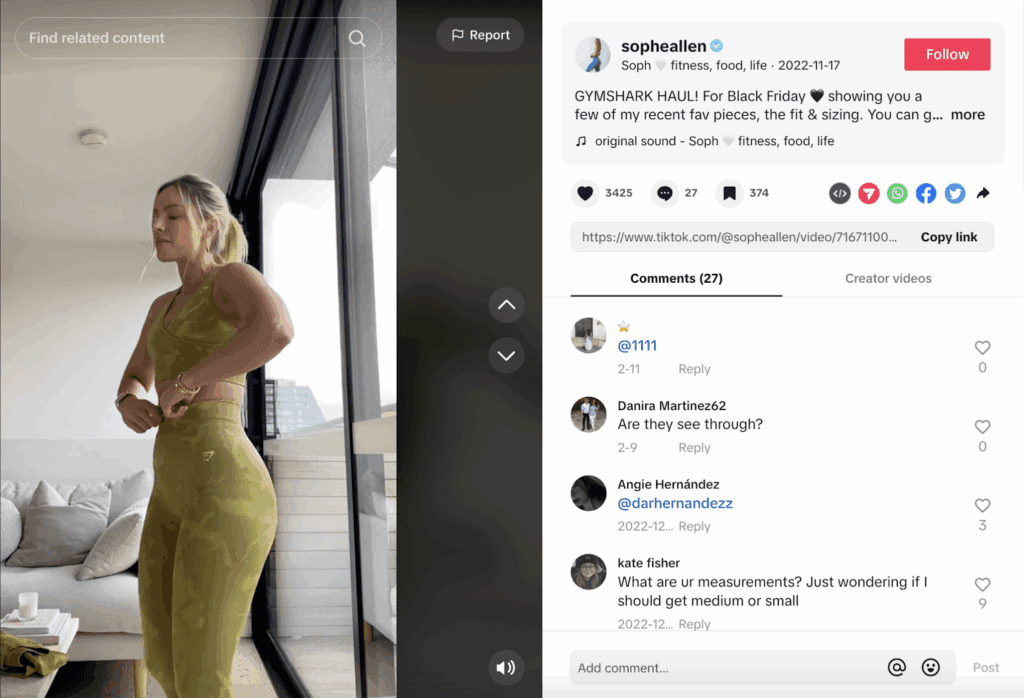
Image credit: https://sproutsocial.com/insights/influencer-marketing-examples/
Collaborating with Influencers for Increased Reach
Influencers are a driving force in the world of eCommerce. Whether you run a business or you enjoy shopping online, you’ve probably come across influencers. Influencer marketing is all about teaming up and partnering with influencers to gain traction for your brand and drive traffic and sales. Almost 70% of consumers trust recommendations from influencers they follow on socials and 85% of marketers believe influencer marketing has boosted their customer acquisition rates (source).
Collaborating with influencers offers a raft of benefits. These include:
- Expanding your reach
- Targeting new audiences
- Leveraging the popularity and influence of well-known, trusted influencers
- Raising brand awareness
- Enhancing brand credibility
- Boosting customer engagement
- Increasing your follower count for short and long-term success
- Improving ROI
Top tips to find the right influencers for your brand include:
- View profiles, portfolios, previous campaigns and partnerships
- Get to know influencers before you make decisions
- Ensure influencers have a following that complements your target customer
- Prioritise values, reputation and credibility
Offering Personalised Recommendations
Shopping has evolved. Now, when you visit your favourite sites and stores, you get everything from special offers to recommendations based on previous searches or purchases. If you’re not already using personalised recommendations as a sales tactic, now is the time to jump on the bandwagon.
Key reasons include:
- Improving customer engagement
- Showing customers you care about their likes, preferences and interests
- Increasing sales: Statista data suggests over 60% of marketers have increased conversions by personalising recommendations
- Tailoring marketing to improve lead quality
- Lowering the risk of cart abandonment
Ways to enhance personalisation on your website include:
- Adding customised CTAs: HubSpot research shows that personalised CTAs can boost click-through rates by over 200% compared with generic CTAs
- Showcasing products linked to previous searches and orders
- Including personalised offers and discounts
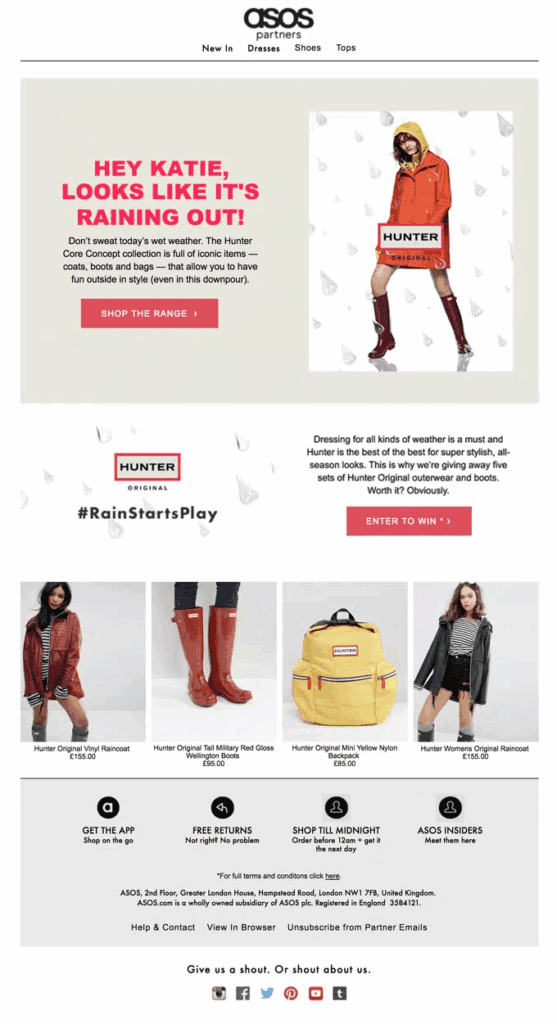
Image source: https://www.litmus.com/blog/dynamic-email-content-examples
Utilising Email Marketing for Conversions
Email marketing can be incredibly effective for eCommerce businesses. Almost 5 billion people in the world have at least one email account and 99% of us check our inboxes daily (source). As a retailer, you can use email to boost conversions in multiple ways. Examples include:
- Introducing your brand to new customers
- Building strong connections with existing customers
- Developing long-term relationships
- Providing easy access to sales and deals
- Adding personalisation
- Boosting sales by following up on searches, product and page views and abandoned carts
- Encouraging engagement and interaction
- Sharing news and updates
- Offering insights into the human side of your brand
- Maximising ROI
Personalisation is effective when using email marketing to increase eCommerce conversions. Open rates are 50% higher when there’s a personalised subject (source). Customised emails also have a 2.5 times higher click-through rate.
Here are some best practice guidelines for using email to supercharge conversions in 2025:
- Match the tone to your brand identity and your target customer
- Add a snappy, original, enticing subject
- Add personalisation
- Use personalised product recommendations
- Respond to previous expressions of interest, for example, offer a special discount or time-limited deal on items a customer has left in their cart
- Make your subscribers feel like VIPs by providing exclusive access to news, updates, sales and offers
- Celebrate personal milestones, such as birthdays and first-order anniversaries
- Make the most of seasonal occasions and events that are relevant to your brand and ideal customer
- Check spelling and grammar
- Make your emails look attractive and use engaging copy
- Add links to buy products quickly and easily
Providing Multiple Payment Options
Around 10% of people leave items in their carts due to a lack of payment options (source). Nowadays, there are all kinds of ways to pay for products. If you’re a store owner or retailer, it pays to cater to your customers’ preferences and expectations.
Popular ways to pay online include:
- Debit cards
- Credit cards
- Digital wallets
- Buy now, pay later
- Credits and loyalty rewards
- Gift cards and vouchers
- Coupons and discount codes
The best way to boost conversions and reduce cart abandonment related to payment options and processes on your eCommerce site is to diversify. Use customer feedback to get ideas and suggestions, learn how people want to pay in 2025 and take inspiration from other sites. Offering a range of options gives customers flexibility. If you’re too limited, you may lose out to other stores.
Analysing and Testing for Continuous Improvement
We may think that our eCommerce businesses are brilliant, but there’s always room for improvement. No store or venture is perfect.
There are two key steps involved in monitoring performance: Analysing and testing.
- Analysing
Analysing data is an effective way to gather information about how users interact with your website, monitor behaviours and track metrics, such as page views and conversions. Collecting and evaluating data enables you to gauge how well your site is performing, identify strengths and weaknesses and see where you could make improvements. With accurate data, there’s no need for guesswork or going on hunches. You can make well-informed decisions that will benefit your customers and your business.
- Testing
In a parallel universe where everything is rosy, we’d get every element of designing and running an eCommerce store right the first time around. Sadly, back on Planet Earth, this simply isn’t possible. Even the most experienced retail guru makes mistakes and encounters challenges.
Testing can help you lower the risk of errors, identify problems before they impact customers or your brand reputation and optimise customer experience and conversion rates. From designing your homepage and elevating product images and descriptions to trialling different CTAs and checkout processes, test before you commit for the best results.
Pricing Transparency and Clear Cost Information
Cart abandonment is a phrase that makes every eCommerce business owner’s heart sink. You’ve lured a customer in, they’ve chosen a product, you’re nearly at the finish line, and then, boom, you’ve lost the buyer.
There are many reasons why browsers don’t become buyers, but the most common cause of cart abandonment globally in 2024 was high costs at the checkout, according to Statista. A whopping 41% of shoppers changed their minds due to expensive shipping and 30% backed out because of unexpected charges.
Buyers want transparency and they want to know how much they’re paying before they waste time putting in their name and address or selecting delivery options. Providing clear information and prioritising transparency can help you reduce abandonment rates and increase conversions.
The Last Word
Every eCommerce business owner wants to hit the dizzy heights in terms of conversion rates. Understanding the best ways to optimise conversion rates can help you drive traffic and sales, boost orders and lower page bounce and cart abandonment rates. Proven strategies and steps to success in 2025 include optimising product pages, enhancing user experience, using high-quality images and video content, and adding effective, tailored CTAs. Additional tips include adding personalisation, simplifying and streamlining your checkout process and taking advantage of the power of customer reviews.
Providing multiple payment options, being transparent about fees and costs, analysing and testing, collaborating with influencers and utilising email marketing effectively can also send your conversion rate soaring.
Ready to See Your Conversion Rate Sky-Rocket? Sign Up Now!
If you’re keen to increase your eCommerce conversion rates in 2025, sign up to Blog Collabs here.