
How to Make Money with a Blog


Image – Pixabay CC0
Blogging in 2026 is big business. In fact, the industry is now worth more than $107.5bn worldwide while blog sites account for almost one-third of all websites. Crucially, there are millions of bloggers who make a full-time income from content while businesses across the globe use blogging as a key part of their marketing strategies. So, it’s fair to say the landscape has changed dramatically since the turn of the century.
Nevertheless, it should be noted that only 5% of bloggers make good money from their blogs. And it’s not always about quality. In truth, we’ve seen plenty of brilliant blogs fail to generate revenue due to a lack of traffic and ineffective monetisation strategies. If you are serious about making money from a blog in 2026 and beyond, our first tip is this: learn to treat it as a business.
In this guide, we’ve pinpointed the steps you should take to transform your blog from a creative outlet to a money-making machine. Whether your goal is to become a full-time blogger or use the platform to build brand awareness for your existing company, here’s all you need to know:
1. Choosing Your Blog’s Niche
The first big question that any blogger must ask is, quite simply, “What topic should my blog cover?”.
Online content can cover any topic imaginable and, with a little research, we could find several sites dedicated to the most obscure niches. However, if your goal is to make money from blogging in 2026, it makes sense to familiarise yourself with the most profitable niches on the market. Experts at web hosting company Wix have done the hard work by confirming the categories that the best niches typically fall into:

Popular categories, confirmed by Wix.
A niche that falls into one of the categories above validates the audience demand, as well as profit potential. However, we would advise against simply following the perceived money.
Finding a Niche for You
While verifying that there is money to be made in your niche is important, the best blogs strike a balance between market profitability and future content quality. We would always suggest that following your passions is a smart move.
We could all produce a few blog posts on topics we don’t feel passionate about. However, when tasked with publishing multiple posts each week for years to come, you may struggle for inspiration when working in a niche where you feel ambivalence. Worse still, you’re up against 4.4 million daily blog posts, including thousands in your niche. Your lack of genuine expertise and enthusiasm would make it very difficult to stand out from the competition.
Conversely, writing about something you love is advantageous for the following reasons;
- You won’t struggle for ideas, today or in years to come.
- Your enjoyment means you won’t get disheartened if revenue doesn’t come fast.
- Finding your authentic voice is easier, thus resonating with your audience.
- Your genuine expertise will provide value, which keeps readers returning.
The niche you choose may not boast the same level of demand as some, but this also means the competition will be smaller. As long as you approach the blog with a strategy focused on smart revenue generation, making money is a possibility.
2. Setting Up Your Blog for Success
Before turning your attention to revenue generation, you must ensure that your blog is up and running style. There are plenty of Content Management Systems for bloggers to choose in 2026, but WordPress remains the most popular by far.
Installations can be made via your web host or directly through WordPress.com.
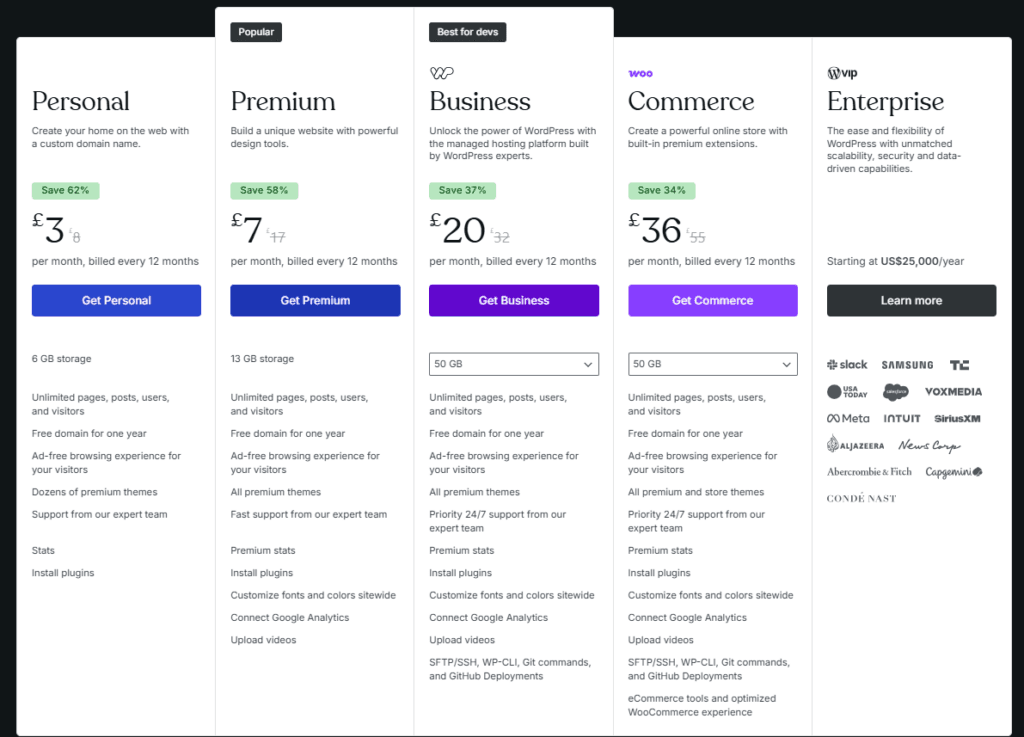
The price plans at WordPress.com
WordPress has a market share of over 40% across all websites (not just blogs), which means readers are familiar with how to navigate the sites – not least because they are made using templated layouts. This approach to design also means that you can create a great website without technical expertise, although bloggers may still hire a designer or pay for a premium WordPress theme.
When designing your blog, whether on WordPressor not, you must always consider the reader’s perspective. The goal is to help them discover your blog with ease, navigate it with ease, and enjoy a great user experience (UX) void of any trust issues. The following checklist will ensure that your site has the underlying elements needed to thrive;
- Confirm that the web host delivers optimal uptime.
- Check that your WordPress site is supported by a SSL certificate.
- Test the design and loading times on mobile and desktop devices.
- Choose a memorable domain name.
- Download backend plug-ins to help manage your blog site.
- Support your blog with social media pages.
- Create an “About” page and other necessary resource pages.
Take these steps before publishing your first blog and the blog site will launch on a far more positive foot.
3. Content Creation: What Works?
Selecting a niche and designing an attractive blog site provides a solid foundation, but the quality of your content is what determines whether visitors become emotionally invested. While building a readership is vital, a blog lives or dies by its ability to keep users coming back.
Our first piece of advice is this: do not try to compete with national or global news outlets.
If you write about football, for example, there is a huge audience of fans available. However, you are never going to compete with the likes of Sky Sports or BBC when it comes to big news. So, you need to find something that gives your blog a unique position. It’s also typically better to opt for evergreen content that can continue to gain traffic from new visitors over the months to come. The 90sfootball.com is a good example, showing a clear niche that does not rely on daily updates or daily visits.

Key Considerations for Your Content
Understanding that your blog should focus on magazine style content rather than news is a good starting point. However, a successful blog should be supported by a clear content strategy. The following factors will guide yours to greatness:
- Content Purpose
Two bloggers working in the same niche may set out with very different goals for what they want their posts to achieve. Is your blog designed to educate the reader and help them self-improve? Or maybe it’s purely about lighthearted entertainment? Perhaps your content is designed to challenge thoughts?
While every blog post is unique, there needs to be a consistent purpose. A clearly defined mission statement is essential.
- Content Voice
The content voice is essentially a blogger’s brand tone. Some look to use serious and jargon-fuelled content to cement their place as an authoritative voice in the field. Others prefer a relaxed tone for easily digested content that creates a friend-like bond between blogger and reader.
There’s no right or wrong answer, but authenticity is still a priority for the 77% of internet users who regularly read blogs.
- Media Types
One of the great things about blogging is that you are not limited to text. Multimedia publishing keeps the domain feeling fresh while it can also break down language barriers and express points with greater clarity. Some multimedia streams will additionally open the door to new revenue streams.
The fact that people remember 95% of a video’s message highlights how introducing different types of media can aid engagement too.
- Publishing Schedule
Another big issue relates to the publishing schedule. For starters, you need to post regularly enough for people to come back. A static blog will soon see returning traffic figures decline. At least 2 posts per week should be the aim at the start, growing steadily as you grow. Timing is also key.
If people expect you to post on a Monday morning, make sure you do. It then becomes a part of their weekly routine, giving content the best chance to shine.
4. Maximizing Blog Monetisation
Creating content that gives your blog a USP while engaging audiences is one thing, but it counts for very little without the right monetisation strategies. When reaching out to companies who may pay to be associated with your blog, you must remember your niche. Working with brands in your chosen field, or local businesses, will deliver far better opportunities. Meanwhile, you must consider the habits of your audience. This enables you to focus on the strategies most likely to yield a positive response.
Above all else, we have seen the need for diverse revenue streams become clearer by the year over the past decade. The best options are detailed below:
- Display Ads
Display ads are typically where bloggers start to make money. You sign up to Google Adsense and then place adverts on your blog. When a reader clicks an advert, you will earn money. The earnings via this route are modest, ($0.20 – $2.50 per 1,000 visitors on average) but you can start to earn money almost immediately.
The key is to have display ads featured in prominent positions on the homepage and within the blog post content itself.
- Sponsored Content
In addition to random display ads, you could sell a display ad on your homepage to a company linked to your niche. Alternatively, a related business may be willing to sponsor your content, such as a series of blogs. For example, your beauty blog could start a weekly “Monday Makeover Sponsored By [Insert Brand]” series of posts.
Competitions through your blog may also unlock a sponsorship opportunity. As well as getting paid, the brand collabs supply a product as the competition prize.
- Paid Content
Readers who love your free content may be willing to pay for VIP content. This could include ebooks and guides, or just more of the content that you already provide. In some cases, VIP content could simply mean providing early access. When people advocate your blog and want to support your journey, they’ll often be happy to pay.
Managed correctly, and supported by the right type of audience, paid content can quickly become your largest revenue source.
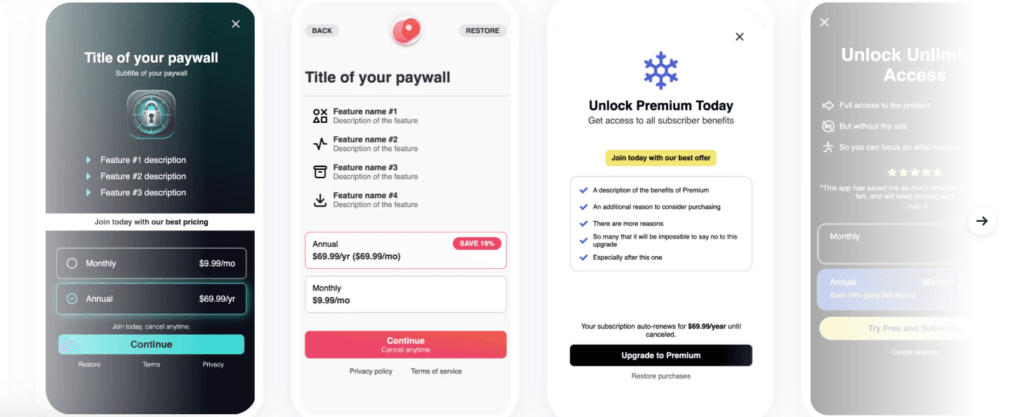
Paywall creation with Revenue Cat
5. Driving Traffic to Your Blog
It would be inaccurate to suggest that web traffic is the only thing that matters in relation to revenue. Nevertheless, it is an essential metric that opens up greater opportunities to earn money from the reader and external sources alike.
We would never say “Once you hit X monthly visits, you’ll make a full-time income?” as there are far too many variables to consider. Still, research suggests that bloggers can aim for $10-$30 per 1,000 unique views. It is a very rough estimate, but does at least provide a barometer of what to expect.
The obvious question, then, is “How do I get more people to visit my site?”. Some of the most effective options are detailed below:
SEO (Search Engine Optimisation)
Search engines like Google remain the top source of web traffic by far. Therefore, a strong SEO strategy should be at the top of every blogger’s list.
When a user types a term into the search bar, the search engine ranks pages based on relevance and quality through the Search Engine Results Pages (SERPs). Organic SEO is how your blog site can appear higher up the rankings and subsequently gain more traffic as most people do not scroll beyond the first page.
To grow organic SEO you should use on-page tactics like keywords, as well as off-page tactics like backlinks from other websites. Alternatively, you could run a paid ad campaign that sees your site promoted in the ‘sponsored result’ position at the top of page one.

Either way, gaining visibility on search engines is sure to yield a spike in traffic.
Social Media
Social media is a great outlet for bringing traffic to your blog. There are over 5.25 billion social media users globally, which allows you to tap into a huge audience. You can post links to your blog posts directly onto Facebook, Twitter, Instagram, and other social media channels with automated tools.
Aside from the convenience of directing readers to the exact post, social media is a chance to;
- Build awareness by reaching out to new audiences.
- Gain trust and authority through high follower counts.
- Deepen connections by interacting with users.
- Learn more about what readers want from your blog.
Outreach Tactics
Finally, you can look at outreach tactics where you ultimately make people aware of your blog through interactions on other websites before bringing them to your domain. Some examples include;
- Getting your website listed on a directory of great blogs.
- Being interviewed by a publication or relevant outlet.
- Encouraging existing users to introduce their friends.
- Becoming a regular contributor on forums linked to your niche.
- Providing guest posts or review pieces for others in your niche.
6. Analysing Blog Performance
As a blogger, you won’t get everything perfect at the first attempt. As such, it’s imperative that you learn to analyse the blog’s performance and use this data to improve. After all, audience demands will only move in one direction as you become more established. If the blog isn’t evolving, it will get left behind.
Data analytics can be further supported by ideas like A/B testing to perfect content strategies and revenue generation campaigns alike. Firstly, though, you must analyse the right metrics. With the right plug-in or CMS software, you can track key metrics including;
- Page views and unique visitors to know how much traffic you’re gaining. And, more importantly, whether performance levels are improving.
- Traffic sources, which help you know which campaigns are working and which may require improvement.
- Bounce rate, which signals how many readers leave your site after viewing just a single page. You need this to be low.
- Revenue per Mille (RPM), which highlights your earning per 1,000 views. This shows whether your display ads are working well.
The key is to keep analysing your blog while stirring to keep getting better. You cannot afford to rest on your laurels, even after hitting your initial goals.
7. Scaling Your Blogging Income
Scaling your blogging income ultimately comes down to three main points;
- Growing your audience.
- Creating further revenue streams.
- Maximising the value of each reader.
Growing your audience comes down to driving more traffic and continuing to deliver value-driven content. Do this while finding ways to go viral or get people talking, not least through brand links, and you’ll never look back. As the blog grows, you may consider hiring other writers to join your platform. The pros are that it increases content volume and brings a new voice. The cons are that you have to pay them while it may dilute the quality of content in the eyes of some readers.
To branch out into new revenue streams and boost the average earning per reader, try out the following:
Related Content Channels
The blog itself can earn money through the methods mentioned earlier, but you can elevate your earnings by looking at third-party platforms. Building a successful YouTube channel is a lot easier if you already have existing followers from your blog. The biggest bloggers, like BeardMeartsFood, earn huge money through this channel’s ad revenue:

Estimated BeardMeatsFood YouTube earnings via Social Blade.
It should also be noted that further earnings could be made through ideas like in-video sponsorships. In addition to YouTube videos, you can publish and monetise podcasts or other media formats.
Merchandising
If people love your content, they may well buy products you have to sell. Bloggers who have coined a catchphrase or mantra can easily turn this into t-shirts, mugs, and other small items. Or they could launch products linked to their niche. For example, a blog dedicated to home interiors may launch a line of homewares.
Merchandising doesn’t have to distract you, either. Outsourced services like print-on-demand companies can manage most of the workload on your behalf.
Selling Services
If your blog sets out to help others, it’s likely that you could sell a range of services that achieve the same goal. Better still, you already have an established customer base. A fitness blogger, for example, could sell online PT services. You only need a handful of your readers to sign up for this to become a significant revenue stream.
Aside from the direct rewards, it all feeds into the concept of scaling your personal brand as a blogger. If that doesn’t take your earnings to the next level, nothing will.
Ready to Start Earning with Your Blog?
The most important step for any blogger to take is getting started. And if you’re looking to find collaboration opportunities with brands and other content creators, Blog Collabs is here to help. Get your digital journey started now.