How to Start a Fashion Blog – Tips for Success

I know from experience that launching a fashion blog can be a rollercoaster of an experience.
Sometimes you’re excited, and sometimes you know you’re making mistakes.
But even if you think the fashion space is saturated right now, we’re here to argue building a fashion blog is still rewarding in today’s crowded digital space. You can do it for monetisation or personal satisfaction. It’s up to you.
In this guide, I share the exact steps that I would follow if I were starting from zero and aiming for a fully fledged fashion blog. I’ll tell you which platforms to use and give you practical tips for success. By the end, you’ll have a clearer idea of what you need to do to be a successful fashion blogger.
I’ll be honest, I wish I’d known the information in this guide before I’d started my first blog. If I had, then I would’ve avoided a lot of pain and failure.
Defining Your Fashion Niche
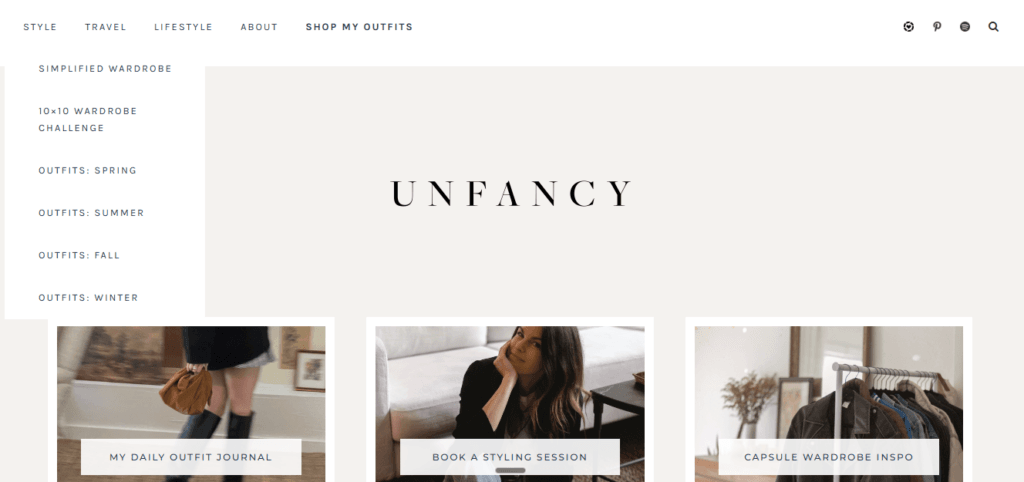
The most important thing you can do when starting a fashion blog is to define your niche. Getting this right is critical.
When I first started, I tried to cover everything. I wanted to be an expert in sustainable fashion, runway and catwalk models, street style and everything in between.
The problem with taking this approach is that it diluted my message. I thought I would be pleasing everyone, but it turned out I was failing to get through to the people who wanted to read my content the most. Every time I would gain an audience member interested in runway stories, I’d then lose them by focusing on sustainable fashion.
Therefore, your job as a fashion blogger is to develop a narrow and predictable niche. When you do this, you’re more likely to attract a loyal audience and stand out in your particular segment.
Google will also reward you when you do this. It’ll rank you higher for particular search terms with specific intent. Plus, you are more likely to attract brand partnerships because you are aligning with their audiences.
For example, suppose you are a sports and athleisure blogger. If you focus solely on these topics, brands that sell these clothes will want to work with you.
To define your fashion niche, I’d recommend doing the following:
- Write down your passions and expertise. Think carefully about which areas of fashion you are knowledgeable in, whether it’s vintage plus-size fashion or something else.
- Research your competition. Use Pinterest, Google, and Instagram to see what other bloggers are doing to share their content.
- Check for demand. Use SEO tools like Google’s Keyword Planner to check that people are actually searching for the content you want to provide. If the keywords you’re targeting are getting less than 100 searches per month for your chosen keywords, you won’t attract a large audience.
Here are some additional tips to define your niche properly and attract a larger audience:
- Look for intersections of interests that other bloggers aren’t covering (e.g., the combination of sustainability and vintage style).
- Test your blog concept before committing – don’t spend a lot of money on expensive tools and web hosting before you’ve validated your idea for free on platforms like Instagram.
- Write down your audience demographics and consider the type of content they want.
- Build your brand around what’s going to be most appealing to them.
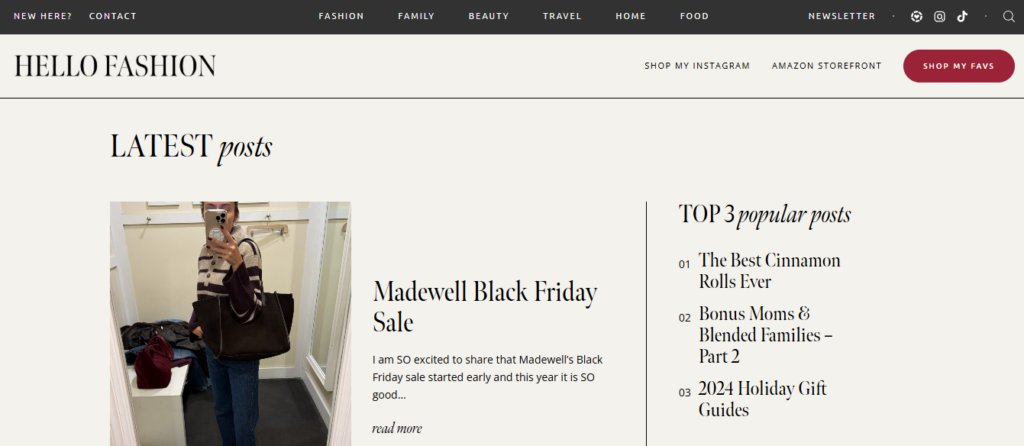
Many bloggers believe that simply writing what they are interested in is enough, but I would argue that that is only part of the story. What really matters is your ability to give audiences what they want from your content.
Remember, there are a thousand other fashion blogs they can go to instantly. So yours needs to do something that really stands out and makes them think.
Choosing the Right Blogging Platform
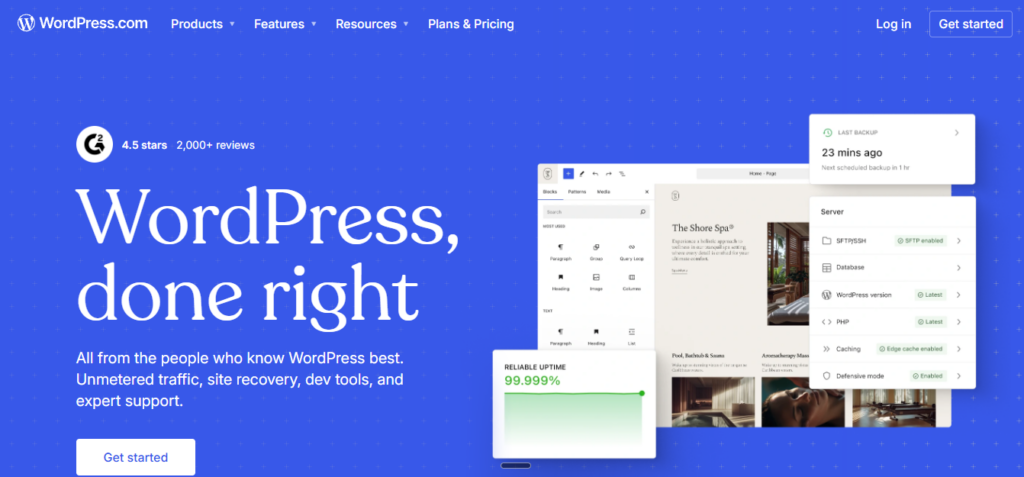
The next step in the process is to choose the right blogging platform. How you do this is up to you.
When I started years ago, I was using a combination of Blogger and WordPress. But there are many options that you can go for today.
Blogging Platform Comparison
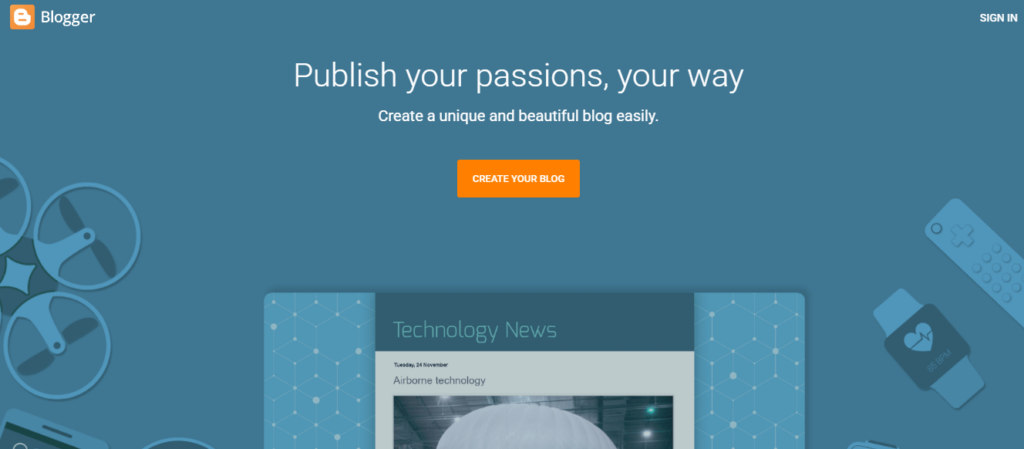
Most people beginning a fashion blog start with a free platform like WordPress or Blogger mentioned above. What’s nice about these is that they have no financial outlay and they’re easy to set up.
They’re also incredibly well supported. There are thousands of articles and guides on how to use these platforms.
The down side though is the limited customisation. If you want to turn your blog into something unique, you could find that you don’t have the scope you need using free tools.
You may also have to put up with ads on top of your content that you can’t remove. These can make your blog look less professional or serious to your audience and sometimes damage their experience.
If you are a serious fashion blogger and you want more control, I recommend self-hosted websites on WordPress.org. These offer far more customisation and come with thousands of SEO plugins and flexibility for monetisation. With this platform, you have just as much scope to make your fashion blog unique as the leading sites in the space.
As for website builders like Squarespace and Wix, these can be useful if you want to get going quickly, and their templates are beautiful, but there are trade-offs. You won’t have the same level of customisation, and you’ll have to pay a monthly fee regardless of whether the website meets your technical requirements.
My decision-making process
So if I were you and I was looking at the possibility of setting up a fashion blog, what questions would I ask? ?
- Is the tool scalable? I would think about whether I would want to scale up my fashion blog in the future and if that’s realistic. I’d also consider whether the tool I wanted to use could accommodate a shop.
- Does the blogging platform include tools, SEO tools and speed features? If it doesn’t, I might be tempted to look elsewhere.
- Does the fashion blog give me flexibility? If my fashion blog is visually heavy, I will need additional tools to manage all of the visual images.
- Do I have the budget? Can I afford the domain and other additions like plug-ins and themes?
Once your decision is made, the next step is to create your domain and set up your website. This process is simple. All you need to do is register your domain and choose your host, install WordPress and pick your theme.
Sometimes you might need additional plug-ins. For example, Smush is helpful if you plan to include a lot of images, while Yoast SEO is useful for ranking higher on Google.
Crafting Your First Blog Post
Once the back-end is set up, you are ready to craft your first blog post. I know from personal experience how nervous I was before I wrote my first post. .But don’t worry – you’ll soon get into the swing of it.
In this section, I teach you what I learned from the experience and the step-by-step process I follow for each post. This method keeps my readers happy.
Brainstorming
My process starts with brainstorming ideas that solve my readers’ problems and align with my specific niche. This allows me to provide the most useful content to the people reading my blog.
For example, let’s say that my target audience is women on budgets looking for vintage clothing. Their pain point is finding affordable options, so I could write a guide on how to find affordable vintage clothing in their particular area.
Keywords
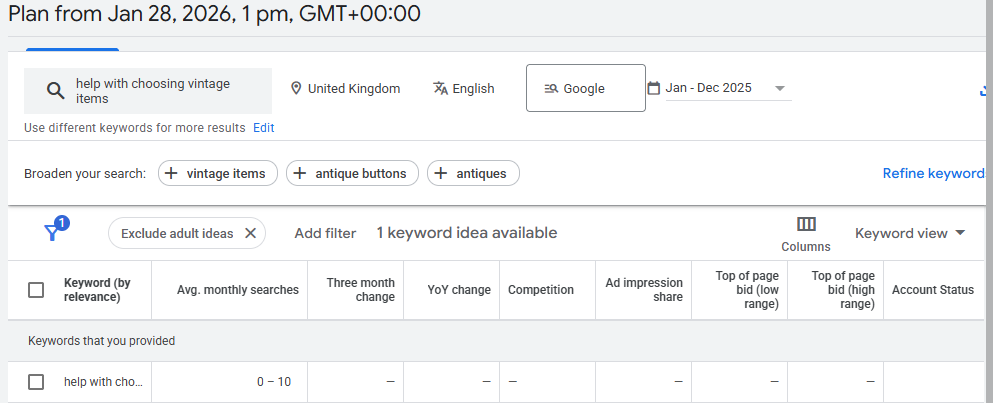
The next stage is to perform keyword research. I start by targeting low competition, high volume keywords that other bloggers haven’t yet exploited.
I’d also look for high intent terms where Google users are clearly looking for actionable information that I can provide. For example, “help with choosing vintage items,” or “help with vintage accessories.”
These days, there are all sorts of Google keyword research tools that you can use, like Keyword Planner.
I highly recommend looking into these and getting used to how they work so you can find new opportunities for your blog posts.
Structure
Once I have my ideas and keywords, I then outline the structure of the blog. The most important parts are:
- The title
- The hook
The title should directly serve a need or create curiosity. You want it to embody at least one psychological trigger to get users to click.
The hook is also important. This is the first couple of sentences that tells readers why they should continue reading. This section should provide them with a teaser of the value that they’re going to receive if they consume the entire article.
After that, the structure proceeds as you might expect. If possible, I like to include a personal story or anecdote after the introduction. These are really good for reeling in audiences emotionally.
Then, I provide the main content and tips, plus inspiring visuals. For a fashion blog, visuals are important, so ensure that you get these right. Make sure you’re using images that your audience can aspire to or that creates some form of interest.
If you are planning on monetising your blog, you’ll need a call to action at the end of each post. This is what gets audiences to take the next step – for example, calling you for a free fashion consultation.
Writing
When writing your fashion blog, try to use the first person and short paragraphs. Break everything up with plenty of white space, bullet points, and subheadings. Make it easy to read so that your audience can digest it just by scanning it.
Apply SEO basics
Finally, you’ll want to apply SEO basics, including:
- Lots of photos and visuals
- Ensuring that they are edited properly and shot in natural light
Then you’ll need to include backend items like:
- Title tags
- Alt text for your images
- Meta descriptions
These provide Google with more information about what your blog is about, so that it is more likely to recommend it to users.
Don’t make the mistakes that I made early on my fashion blog!
For example, don’t make it too sales-y. This will put off most audiences.
Also, make sure you get the mobile formatting right since many of your readers will be accessing your blog on smartphones.
Building a Social Media Presence
These days, having a blog is not enough. You also need a social media presence.
Social media, in my experience, is the biggest driver of blog growth. Once people know about you on social media, they’re much more likely to follow your blog and search it out specifically.
For fashion bloggers, you need to follow social media priorities.
- Instagram. Instagram is the top priority for reels, stories, and visuals. It’s the primary avenue through which you’ll communicate your message.
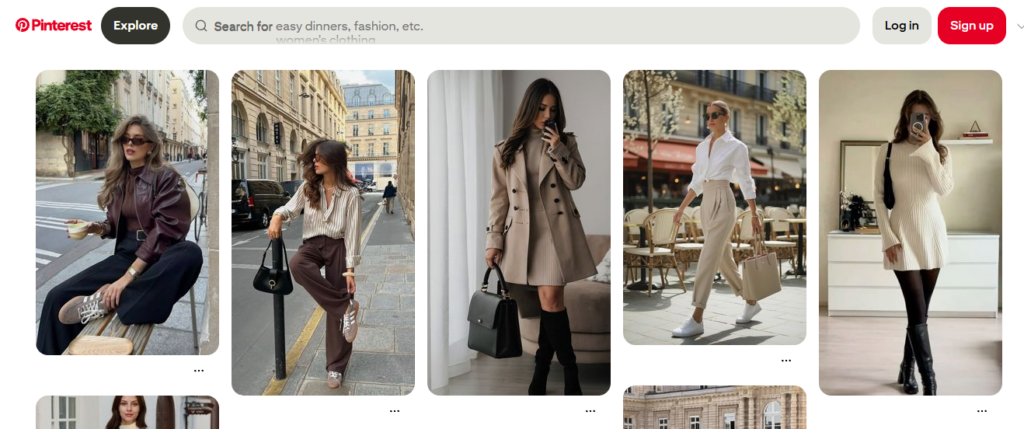
- Pinterest. Pinterest is more set up for driving long-term traffic. Plus, it has shoppable icons that you can use for affiliate marketing or direct shop sales.
- TikTok. TikTok is ideal for fast growth, especially among young audiences. It’s a great option if you want to communicate your fashion blog offers something novel that audiences can’t find elsewhere.
- YouTube. Finally YouTube is suitable if you want to make deeper content. This option works, for example, if you need a video presence and want to build a more personal brand around your fashion advice.
What would I recommend doing on a daily and weekly basis to build your social media presence for your fashion blog?
I would start with a content calendar. These are easy to create now using AI tools, or you can build one manually.
Make sure that every item in your content calendar is relevant to your niche and targeting the keywords you identified earlier. It’s ok to mix different types of content (like fashion tips with outfit posts) as long as they satisfy your audience.
Next, I would think about my hashtag strategy. How am I going to use hashtags in a crowded online space to attract the audience who will benefit most from my blog?
I’d do this by looking at niche-specific hashtags and combining these with ones that are currently trending. This would give me the best of both worlds.
Lastly, part of my weekly routine would include engagement tactics. I would try to reply to most comments and DMs. I would also look for other ways to increase engagement using existing platform tools like polls or surveys.
Sometimes it can be helpful to engage in cross-promotion. This is where other blogs and influencers can come in handy.
Sometimes you can work with bloggers directly through platforms like BlogCollabs.
You can also reach out independently if you feel like you’re saying something which is useful to their audience. Just tell them how you can benefit them.
Networking with Fashion Brands
I also think networking with fashion brands is a good idea for new fashion bloggers. This action tells your audience the impression you are directly connected to the people who matter most. When you do this, you essentially become their bridge to the designers themselves.
You can also leverage networking for:
- Free products
- Sponsored posts
- Affiliate deals
- Overall credibility
Therefore, it is not just a cool thing to do; it also makes business sense.
My recommended outreach process
So, if I was starting a fashion blog in 2026, what would my outreach process to fashion houses look like?
- Build a media kit. Even if you run a small blog, it’s a good idea to build a media kit. This provides fashion houses and designers with everything they need to know about your blog, including how many people read it, who you’ve worked with before, and your daily audience count.
- Find contacts. The next step is to reach out to people who matter in the fashion industry. You can find them on LinkedIn, in Instagram DMs, or through public relations agencies.
- Craft your pitch. Crafting your pitch is the most important step. Make sure that you tell the fashion house how your audience fits their niche and offer any value that you can up front. For example, you could offer to host blogs featuring their outfits.
Usually, you’ll need to wait a few days for fashion houses to respond to you. If they don’t get back to you, be polite. Send them a single follow-up note. If they still don’t talk to you, work on your blog and make the prospects of working with you even more compelling. Try to avoid the temptation to pester them.
Another way to get noticed by brands is to join affiliate programs or tag brands in posts. These can be highly effective strategies that draw their attention. Brands will sometimes DM you directly if they think you are a blogger or an influencer who can provide them with real value.
Make sure you always deliver high-quality content if you do wind up working with fashion houses. Be professional and treat it as a real job.
Analysing Your Blog’s Performance
The final step is to analyse your blog’s performance. I recommend doing this so that you can make data-driven decisions and ensure you aren’t missing any low-hanging fruit. The tools I use include:
- Facebook Insights
- Instagram insights
- Google Search Console
- Google Analytics
You can also use third-party tools for tracking email list metrics. These are helpful when calculating things like open rates and click-through rates.
When analysing your fashion blog, you’ll need to consider critical metrics. These are what tell you whether your blog is progressing or if you’re falling behind your competitors. Metrics include:
- Page views to see how many people are viewing each page
- Sessions to see how many unique users you have
- Bounce rate to see how many people are clicking back to search after landing on your blog
- Top performing content to see which content works and you should replicate
- Where your traffic is coming from, whether it’s from Google, paid ads, or social
If you are monetising your fashion blog, then it’s also a good idea to track additional metrics like conversion rates and lifetime customer value. These provide more information on how efficiently your blog is converting audiences into paying clients.
Once you have your data, the next step is to figure out how you’re going to use it. I like to use data to identify the weak points on my blogs and posts.
For example, let’s say that I have a post with a lot of page views but also a high bounce rate compared to other posts. This might suggest the title and hook are engaging, but the content is not relevant or interesting.
In this case, the fix would be simple. I could simply adjust the content to make it more useful to the people arriving on my site.
Another thing I like to do is identify winning topics and double down on them. Once one post hits big, it’s often a good idea to add a follow-up.
Every month I set aside around two or three hours to analyse these metrics and set new goals. Sometimes my objectives might be modest like increasing traffic by 10% in two months. However, sometimes they might be large like reducing bounce rate from 20% to 5%.
You’ll need to think about which metrics to target that will get you closest to your goals. Characterising these properly is essential.
Of course, running through all of these numbers can feel intimidating at first. But you will get used to them quickly. The more exposure you have, the more you will understand them.
Critically, you don’t need fancy equipment or an enormous following to start a successful fashion blog. It simply requires understanding the metrics that matter to you and how to improve them consistently over time.
If you want to work with influencers on your fashion blog, sign up for BlogCollabs today.